
Insights
Insights
Rare Disease Day 2022 – how NICE is responding to the growing rare disease therapy space
Written by Harry Atkins, Assistant Project Manager
Today is Rare Disease Day, a day to raise awareness ...

NICE RWE framework
Written by Amy Crompton, Systematic Review Analyst
Previously, we discussed the use of real-world evidence (RWE) ...
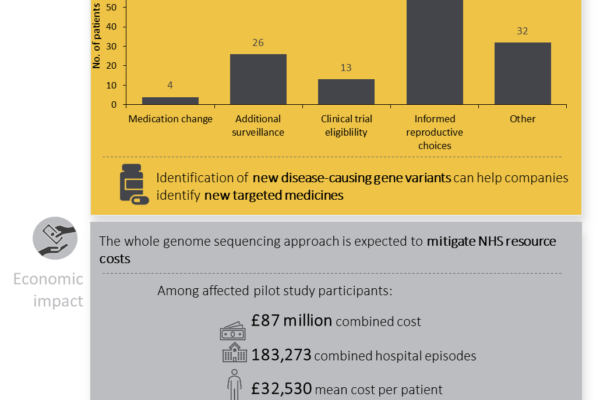
The 100,000 genomes project: paving the way for faster diagnosis and treatment of rare diseases
Written by Emma Lones, Medical Writer
What are rare diseases?
In the European Union, a rare disease is defined ...
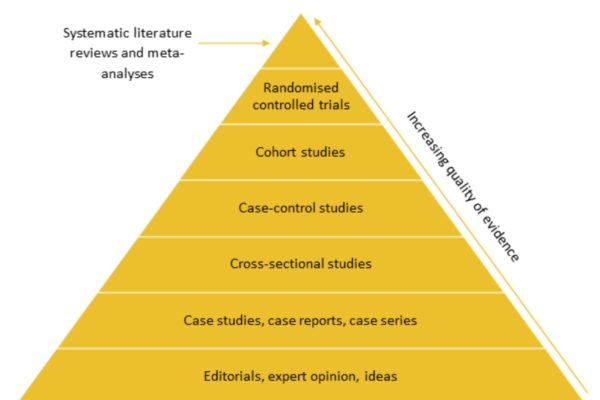
Use of RWE in the reimbursement assessment of medical devices
Amy Crompton (Systematic Review Analyst) and Tom Macmillan (Consultant - Systematic Review)
Hierarchy of ...

National writing day – connecting patients with new therapies
Written by Dom Partridge, Medical Writer
Happy National Writing Day 2021! In line with this year's theme of ...

Improving your search strategy: date limit filters (2/2)
Amy Cromptom (Systematic Review Analyst) and Tom Macmillan (Consultant - Systematic Review)
This blog post ...

Improving your search strategy: randomised controlled trial filters (1/2)
A search filter is a pre-written search strategy (string of search terms) that is designed to retrieve studies with a particular methodology or focus from a specific database and platform (1). The most common filters are designed to retrieve randomised controlled trials (RCTs), which are widely considered the most robust form of research for evidence-based medicine (2, 3).

Applying health technology assessment requirements to your global value dossier
The global value dossier (GVD) is an essential tool used to internally align the global strategy and externally communicate the value of a product. The GVD presents evidence-based messaging to convey the product value story and is a primary resource for affiliates. Unlike a Health Technology Assessment (HTA) submission, the GVD is strategic, bespoke, and not confined by restrictive templates and requirements.

Collaborative webinar: economic modelling in rare diseases
It can be challenging to develop an economic model in rare diseases that optimises HTA and reimbursement outcomes. It can be difficult to fully capture the effects of the disease and the benefits of treatment whilst using sufficiently robust data to minimise uncertainty. This webinar will introduce a new approach in which multiple companies collaborate to develop a core economic model and common data set. An approach that aims to optimise HTA and reimbursement outcomes for all new treatments in a rare disease.
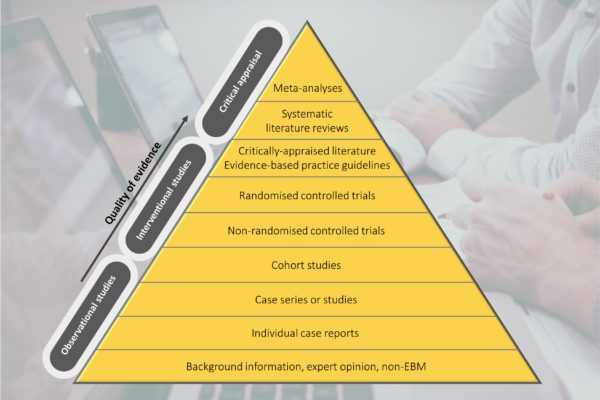
COVID-19, evidence-based medicine and standards for HTA
When Archibald Cochrane formulated his vision for evidence-based medicine (EBM), it was driven by an absence of reliable, robust evidence supporting frequently accepted medical interventions. His observations provoked meticulous evaluations of novel interventions, which subsequently emphasised the need for high-quality evidence in medicine (1). Today, EBM has defined modern medicine; its goal is to minimise the uncertainties in clinical decision-making (2) and to increase the use of high-quality evidence. In practice, this involves the integration of clinical expertise and patient values with the best available evidence (3).

Evidence search for medical devices: challenges and recommendations
In principle, the process of searching for published evidence for medical devices is no different from other health technologies. The NICE process guidelines do not specify alternative sources or a different level of rigour for any kind of health technology. However, when conducting searches for medical devices, the evidence base should be approached differently in order to optimise the precision and sensitivity of the search.

Exploring the NICE MTEP process for developing medical device guidance
The NICE Medical Technologies Evaluation Programme (MTEP) evaluates novel medical devices and diagnostics for use within the National Health Service (NHS). There are currently 3 outputs from the programme: medical technologies guidance (MTGs), diagnostics guidance (DGs) and medical innovation briefings (MIBs). A fourth type of guidance, digital health technologies (DHTs), is being piloted.
No results found.