
Written by Abby Paine, Hollie Pilkington, and Dom Partridge
Two years ago we wrote a blog for National Numeracy Day 2022, and enjoyed the process so much that we thought we would write another one! Last time, we wrote about network meta-analyses (a statistical method we use quite a lot here at Source), but this year we thought we’d introduce you to some of the women in our teams, who use maths as a key part of their everyday jobs. We have female colleagues working in both the health economics and statistics teams – in fact they make up 50% of the staff in those teams!
All of our health economists and statisticians play a key role in the launch of new medical treatments. For any new medicine to be approved for use in a particular disease, it must be more effective and at least as safe as an existing successful treatment (or a placebo). Statisticians review the available clinical trial data to determine whether a new treatment is better due to a placebo effect, or whether the additional benefit is real. Health economists use maths to consider how the effectiveness of the treatment compares with its cost, which is really important because while healthcare services around the world want the best treatment for their patients, they are constrained by budget pressures and need to determine what is the best use of their budgets when they have so many patients to treat.
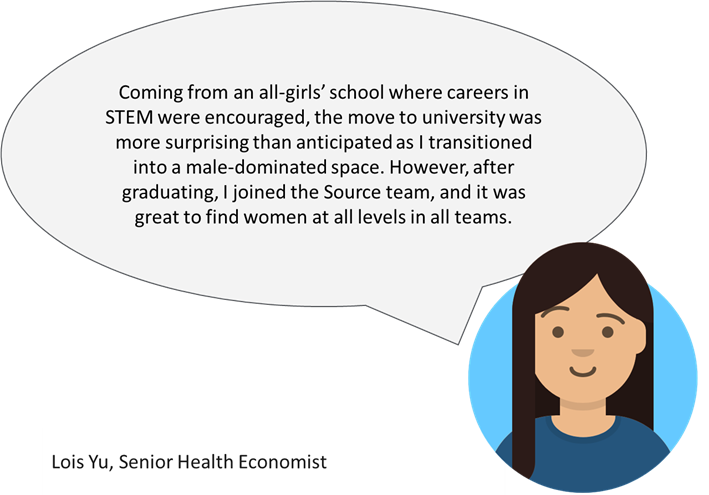
One of the focuses for this year’s National Numeracy Day is making maths work for women and girls. We spoke to some of our female team members to get an insight into their experiences and hope this might encourage other women (and everyone!) to get into maths because it gives you so many career options:



If you are interested in exploring a career in health economics and market access, consider connecting with the Economic Modelling and Data Analysis team at Source Health Economics; we specialise in evidence generation, health economics, and communication.