A European pharmaceutical company developing a new therapy for treatment-resistant depression (TRD) needed to understand its economic potential with only early-phase data. In this case study, explore how we designed a flexible early cost-effectiveness model (CEM) that tested value across different treatment positioning and trial-design scenarios, and fed back strategic recommendations into Phase 3 planning.
At a glance
| Client | Biopharmaceutical company |
| Therapy area | Treatment-resistant depression |
| Service | Health economics: early cost-effectiveness modelling |
| Markets | Global, with EU and US HTA in view |
| Stage | Early clinical development, end of Phase 2 |
| Audience | Global market access, HEOR and clinical development teams |
Key results
- A model concept and early CEM as an initial step towards producing an HTA-ready model
- Early indications of an economically justifiable price (EJP)
- Strategic recommendations on Phase 3 design, plus a prioritised list of further research activities
The challenge
The client had a promising therapy in TRD at an early stage of clinical development. Only early-phase data were available, and the product’s eventual place in the treatment pathway was still undecided. Phase 3 design decisions were approaching, and those choices would shape the evidence available to payers and HTA bodies at launch.
Framing the economic case was complex, the depression pathway involves many lines of therapy and possible comparators, and TRD has no single agreed definition. Early trials were also likely to exclude people with the most severe illness, leaving a gap between trial populations and the patients HTA bodies are likely to assess.
The risk was clear. A Phase 3 programme designed without an economic lens could generate evidence that struggles to support a credible value case at HTA.
Our approach
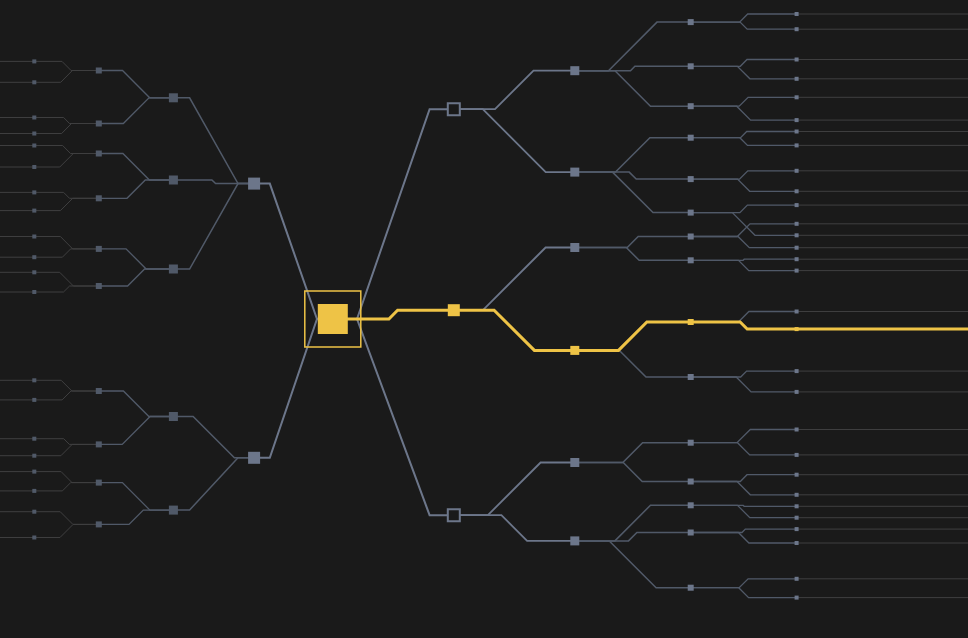
We built the CEM with flexibility in mind, enabling a single framework to test the therapy’s economic case across each plausible future treatment landscape at launch.
- Reviewing precedent CEM. We began with a review of published cost-effectiveness models and HTA appraisals in depression and TRD. This showed how others had structured the pathway, defined TRD and selected comparators, and where those choices had drawn scrutiny. A systematic review identifying 20+ economic evaluations in TRD was critically appraised, and three additional economic evaluations were identified and examined in further detail to inform the model design.
- Designing flexible CEM for future treatment landscape. With the timing of launch undecided, we specified a model structure that could incorporate data from comparators still in development as well as comparators already on the market. The client could evaluate the economic case against each comparator using the best available data while retaining flexibility to incorporate future data readouts as competitors progressed towards launch.
- Turning analysis into recommendations. We worked closely with the client’s HEOR and biostatistics teams to pressure-test the findings and shape them into strategic recommendations on Phase 3 design, considerations for the future HTA-ready model structure, and a detailed list of further research activities.
The outcome
The client now has an early CEM ready to develop into an HTA-ready model as clinical evidence matures, and early EJP estimates. The early CEM sets out the potential economic value of the therapy under alternative future treatment landscapes at launch and different Phase 3 design scenarios.
The work gave clinical development and market access teams a shared basis for Phase 3 decisions. Our recommendations on trial design, and the list of further research activities, give the client a clear route to stronger evidence for future HTA submissions.
Work with us
If you need to understand the economic potential of an asset before Phase 3 decisions are fixed, our health economics team can help, learn more about economic modelling and get in touch.
Download PDF version